Are there any tax implications when buying laser – cut standees for business use?
As a supplier of laser – cut standees, I’ve had numerous conversations with business owners about their purchases. One question that frequently comes up is whether there are any tax implications when buying laser – cut standees for business use. In this blog post, I’ll delve into this topic to provide a comprehensive understanding. Laser-cut Standees

Understanding Business Purchases and Tax Basics
When a business makes a purchase, it’s essential to understand the fundamental tax concepts. In most countries, business expenses can generally be divided into two categories: capital expenses and revenue expenses.
Capital expenses are those related to the acquisition of long – term assets that will be used in the business over an extended period. These assets are expected to provide benefits to the business for more than one accounting period. Revenue expenses, on the other hand, are day – to – day expenses incurred in the normal course of business operations.
Laser – cut standees can fall into either category depending on how the business uses them. If a business purchases standees for a one – time event, such as a trade show or a promotional campaign, they are more likely to be considered revenue expenses. However, if the standees are part of a long – term marketing strategy, for example, if they are used as permanent fixtures in a store or office, they may be classified as capital expenses.
Tax Deductions for Revenue Expenses
For revenue expenses, businesses often have the opportunity to deduct the cost of the laser – cut standees from their taxable income in the year of purchase. This is a significant advantage as it reduces the overall tax liability of the business.
Let’s say a small business spends $500 on laser – cut standees for a local trade show. If the business has a taxable income of $10,000 before considering this expense, and assuming a tax rate of 20%, the tax liability without the deduction would be $10,000 * 0.2 = $2000. After deducting the $500 expense for the standees, the taxable income becomes $10,000 – $500 = $9500. The new tax liability is $9500 * 0.2 = $1900. So, the business saves $100 in taxes by deducting the cost of the standees.
To claim this deduction, businesses usually need to keep proper records. This includes invoices from the supplier (in this case, me), which should clearly state the description of the standees, the quantity, and the total cost. Additionally, it’s a good idea to have documentation related to the business purpose of the purchase, such as event flyers or marketing plans that show how the standees were used to promote the business.
Tax Treatment of Capital Expenses
When laser – cut standees are considered capital expenses, the tax treatment is different. Instead of deducting the full cost in the year of purchase, the cost is usually depreciated over the useful life of the asset.
The useful life of laser – cut standees can vary depending on factors such as the quality of materials used, the frequency of use, and the environmental conditions in which they are placed. For example, if a business estimates that the standees will have a useful life of 5 years, and the cost of the standees is $2500, the annual depreciation expense would be $2500 / 5 = $500.
Each year, the business can deduct the depreciation expense from its taxable income. This spreads the tax benefit over the useful life of the standees. However, it also means that the immediate tax savings are not as significant as with revenue expenses.
Sales Tax and VAT Considerations
In addition to income tax implications, sales tax or value – added tax (VAT) can also be a factor when buying laser – cut standees. The rules regarding sales tax and VAT vary from country to country and even from state to state within some countries.
In some regions, sales tax is charged on the purchase of goods, including laser – cut standees. The rate of sales tax can differ depending on the location of the business and the nature of the purchase. For example, some states may have a general sales tax rate of 6%, while others may have a higher or lower rate.
VAT, which is common in many European and other countries, is a consumption tax added at each stage of the supply chain. As a supplier, I am usually required to charge VAT on the sale of laser – cut standees if my business is registered for VAT. The customer can then often recover the VAT they have paid if they are also a VAT – registered business and the purchase is for business use.
For example, if I sell laser – cut standees worth $1000 to a VAT – registered business and the VAT rate is 20%, I will charge the customer $1000 + ($1000 * 0.2) = $1200. The customer can then claim back the $200 VAT on their VAT return, effectively reducing the net cost of the standees to $1000.
International Purchases
If a business is buying laser – cut standees from an international supplier (like me in some cases), there are additional tax considerations. Customs duties may apply when the standees cross international borders. The amount of customs duties depends on the value of the goods, the country of origin, and the classification of the standees under the Harmonized System (HS) codes.
Moreover, the rules regarding the recovery of VAT or sales tax on international purchases can be more complex. Some countries may have specific procedures for businesses to claim back the tax paid on imported goods. It’s crucial for businesses to understand these rules to ensure they are not overpaying on taxes.
Documentation and Compliance
Regardless of the tax implications, proper documentation is key. As a supplier, I always provide detailed invoices to my customers. These invoices include my business information, the customer’s information, a description of the laser – cut standees, the quantity, the price per unit, the total amount, and any applicable taxes.
Businesses should also keep records of how the standees are used. This can help in case of an audit by the tax authorities. For example, if a business claims a deduction for the standees as a revenue expense, they may need to show evidence of the one – time event for which the standees were used.
Conclusion
In conclusion, there are indeed tax implications when buying laser – cut standees for business use. Whether they are treated as revenue expenses or capital expenses can have a significant impact on the tax liability of the business. Additionally, sales tax, VAT, and customs duties need to be considered, especially for international purchases.
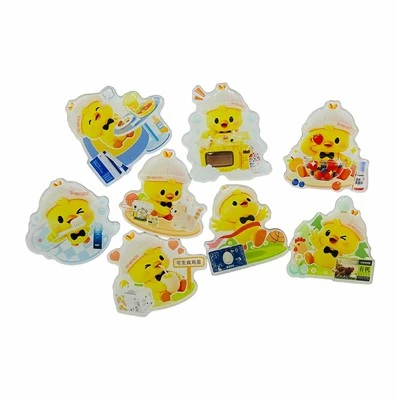
As a supplier of high – quality laser – cut standees, I am committed to helping my customers understand these tax implications. If you have any questions about the tax aspects of your purchase or if you’re interested in our range of laser – cut standees, I encourage you to reach out. We can discuss your specific business needs, and I’ll do my best to provide you with the information you need to make an informed decision.
Acrylic Keychain References:
- Tax Laws and Regulations of [Your Country/Region]
- Accounting Principles and Practices for Small Businesses
- International Trade and Taxation Guidelines
Wenzhou Qumange Craft Co., Ltd.
With abundant experience, we are one of the most professional laser-cut standees manufacturers in China. Welcome to wholesale bulk customized laser-cut standees at competitive price from our factory. If you have any enquiry about pricelist and free sample, please feel free to email us.
Address: Room 802, Building A1, Yuehu Light Industrial Park, Taishun County, Wenzhou City, Zhejiang Province, China
E-mail: 13806616181@139.com
WebSite: https://www.qmgcraft.com/
