Hey there! I’m a supplier in the gear business, and I gotta tell you, modifying gear teeth profiles for specific needs is both a science and an art. It’s not just about changing the shape of the teeth on a whim; it’s about understanding the unique requirements of each application and then making precise adjustments to ensure optimal performance. Gear
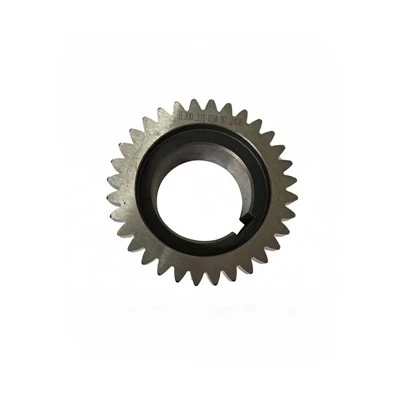
So, why would someone want to modify the gear teeth profile in the first place? Well, there are several reasons. Maybe the application requires a smoother and quieter operation. A standard gear might produce a fair amount of noise due to the impact between the teeth during meshing. By modifying the teeth profile, we can reduce this impact and get rid of that annoying racket. For example, in a high – end audio device or a medical equipment where noise is a big no – no, a customized gear teeth profile can significantly enhance the user experience.
Another reason could be to increase the gear’s load – carrying capacity. In heavy – duty machinery, like mining equipment or large industrial presses, the gears are subjected to enormous forces. A standard gear profile might not be able to handle these loads without premature wear or even failure. By changing the shape of the teeth, we can distribute the load more evenly across the tooth surface, allowing the gear to withstand higher stresses.
Torque transmission is also a crucial factor. Some applications demand a more efficient transfer of torque. A well – designed modified gear teeth profile can improve the contact ratio between the mating gears, which in turn leads to a more efficient transfer of power. This is especially important in automotive transmissions, where maximizing torque transfer can improve fuel efficiency and overall performance.
Now, let’s talk about how we actually go about modifying the gear teeth profile. The first step, of course, is to understand the customer’s specific requirements. I always have a detailed chat with my clients to figure out what they really need. Is it better noise reduction? Higher load capacity? Or more efficient torque transfer? Once we’ve got that clear, we move on to the analysis phase.
We use some pretty high – tech software to model the gear system. This software allows us to simulate different teeth profiles and see how they’ll perform under various conditions. We can analyze factors like contact stress, bending stress, and the efficiency of power transmission. It’s like having a virtual testing ground where we can try out different ideas without having to manufacture a physical prototype right away.
One common method of modifying the gear teeth profile is called profile modification. This involves making small changes to the shape of the tooth profile, usually at the top and bottom of the tooth. For example, we might add a slight convex or concave curve to the tooth surface. This can help to reduce the impact between the teeth during meshing and improve the contact pattern.
Another technique is tip relief. This is where we remove a small amount of material from the tip of the tooth. Tip relief can prevent the tips of the teeth from interfering with each other during meshing, which can lead to smoother operation and reduced wear.
Root fillet modification is also important. By changing the shape of the root fillet, which is the curved area at the base of the tooth, we can improve the gear’s resistance to bending stress. A well – designed root fillet can distribute the stress more evenly, reducing the risk of tooth breakage.
But it’s not all about the software and theoretical analysis. We also rely on our years of hands – on experience. Sometimes, the software might suggest a certain modification, but based on our past projects, we know that a slightly different approach might work better. That’s why it’s so important to have a team of experts who understand the real – world implications of these modifications.
Once we’ve come up with a design, we move on to the manufacturing phase. We use state – of – the – art machining equipment to produce the gears with the modified teeth profiles. Quality control is crucial here. We check the dimensions and the shape of the teeth using precision measuring tools to make sure they meet the design specifications.
After the gears are manufactured, we conduct rigorous testing. We run the gears in a test rig under simulated operating conditions to check for noise levels, wear rates, and torque transmission efficiency. If there are any issues, we go back to the drawing board and make further adjustments.
I’ve seen some amazing results from our gear teeth profile modifications. One of our clients was having problems with excessive noise in their conveyor system. After analyzing their requirements, we modified the gear teeth profiles using profile modification and tip relief. The result? The noise level was reduced by over 50%, and the client was absolutely thrilled.
Another client was using gears in a high – speed industrial machine, and they were experiencing premature wear. We used root fillet modification to improve the gear’s load – carrying capacity. The new gears lasted three times longer than the previous ones, saving the client a significant amount of money on replacement parts.
In conclusion, modifying gear teeth profiles for specific needs is a complex but rewarding process. It requires a combination of technical knowledge, advanced software, hands – on experience, and a commitment to quality. Whether you’re looking to reduce noise, increase load capacity, or improve torque transmission, I’m confident that we can find the right solution for you.
If you’re in the market for customized gears or if you have any questions about gear teeth profile modification, don’t hesitate to reach out. I’d love to have a chat with you and see how we can work together to meet your specific needs.
Transmission Shaft References
- Dudley, D. W. (1984). Gear Handbook, Second Edition. McGraw – Hill.
- Townsend, D. P. (2005). Dudley’s Gear Handbook, Third Edition. Marcel Dekker.
Yancheng Botu Transmission Machinery Co., Ltd.
As one of the most professional gear manufacturers and suppliers in China, we have world-leading production equipment and strong manufacturing capabilities. Please rest assured to wholesale cheap gear for sale here from our factory. Contact us for more details.
Address: No. 33, Yongxing Road, Economic Development Zone, Jianhu County, Yancheng City, Jiangsu Province
E-mail: 15261979878@163.com
WebSite: https://www.ycbtcdjx.com/
