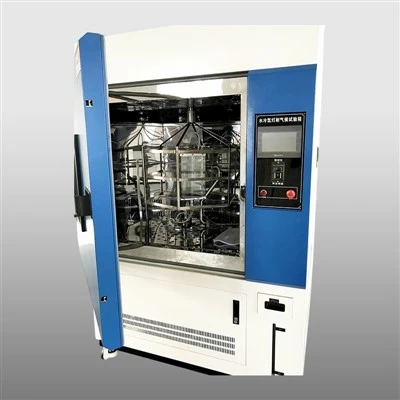
Hey there! I’m a supplier of Xenon Test Chambers, and I’ve been getting a bunch of questions lately about the compliance requirements in different countries. So, I thought I’d write this blog to share what I’ve learned and help you navigate the sometimes confusing world of international regulations. Xenon Test Chamber
The United States
Let’s start with the United States. In the US, the compliance requirements for Xenon Test Chambers are mainly governed by various standards set by organizations like ASTM (American Society for Testing and Materials) and AATCC (American Association of Textile Chemists and Colorists).
ASTM has a wide range of standards related to weathering and lightfastness testing. For instance, ASTM G155 is a key standard for exposing non-metallic materials in a Xenon arc light apparatus. It provides detailed procedures for operating the test chamber, including things like the light source, filtration, chamber temperature, and humidity control. The goal is to simulate natural sunlight and other environmental factors to evaluate how materials will age over time.
AATCC, on the other hand, focuses more on textile materials. Their standards, like AATCC 16, are used to test the colorfastness of textiles to light. They specify the test conditions, such as the exposure time and the type of light source, to ensure that the results are consistent and reliable.
When it comes to safety, the US also has strict regulations. The Occupational Safety and Health Administration (OSHA) sets guidelines to protect workers from potential hazards associated with operating Xenon Test Chambers. This includes proper ventilation to prevent the buildup of harmful gases, and safety interlocks to prevent accidental exposure to the high-intensity light source.
Europe
Over in Europe, the situation is a bit more complex because of the different countries and their own regulations, but they also follow some common standards. The International Organization for Standardization (ISO) plays a big role here. ISO standards, like ISO 4892, are widely recognized and used across Europe for plastics and other non – metallic materials.
ISO 4892 – 2 specifically deals with exposure to laboratory light sources, including Xenon arc lamps. It covers aspects like the spectral distribution of the light, the irradiance levels, and the test specimen preparation. European countries also have their own national standards that may be based on or supplement the ISO standards.
In addition to the material testing standards, the European Union has strict safety and environmental regulations. The Restriction of Hazardous Substances (RoHS) directive restricts the use of certain hazardous materials in electrical and electronic equipment, which includes Xenon Test Chambers. The Waste Electrical and Electronic Equipment (WEEE) directive focuses on the proper disposal and recycling of such equipment at the end of its life cycle.
Asia
Asia is a huge and diverse continent, with different countries having their own compliance requirements. Let’s take a look at a few key countries.
China
In China, the National Standards of the People’s Republic of China (GB standards) are the main reference for Xenon Test Chamber compliance. For example, GB/T 16422 series of standards are similar to the ISO standards and are used for testing the weathering resistance of plastics. These standards define the test methods, equipment requirements, and evaluation criteria.
The Chinese government also has regulations for quality control and safety. The General Administration of Quality Supervision, Inspection and Quarantine (AQSIQ) is responsible for ensuring that products meet the required standards. They conduct inspections and issue certificates for products that comply with the relevant GB standards.
Japan
Japan has its own set of standards, such as the JIS (Japanese Industrial Standards). JIS K7350 – 2 is a standard for the determination of the resistance of plastics to artificial weathering and exposure to irradiation using a Xenon arc lamp. The Japanese government emphasizes the importance of product safety and environmental protection. Japanese companies also need to comply with regulations related to energy efficiency to reduce the environmental impact of the test chambers.
Other Regions
Countries in the Middle East, Africa, and South America also have their own compliance requirements. In the Middle East, countries like Saudi Arabia and the United Arab Emirates are increasingly adopting international standards like ISO. They may also have their own local regulations for specific industries or applications.
In Africa, some countries are in the process of developing and implementing their own standards, but they often rely on international references. South American countries like Brazil have their own national standards, and they are also influenced by ISO and ASTM standards.
Why Compliance Matters
You might be wondering why all these compliance requirements are so important. Well, first of all, compliance ensures the accuracy and reliability of the test results. If a Xenon Test Chamber doesn’t meet the relevant standards, the data it produces may not be valid, which can lead to incorrect product evaluations and potential quality issues.
Secondly, compliance is often a legal requirement. In many countries, selling non – compliant products can result in fines, product recalls, and damage to your reputation. For companies that export their products, meeting the compliance requirements of the target markets is essential to avoid trade barriers and ensure smooth business operations.
Lastly, compliance shows that you are a responsible and trustworthy supplier. Customers are more likely to choose a Xenon Test Chamber that meets all the necessary standards because they know they can rely on the quality and performance of the equipment.
How We Can Help
As a Xenon Test Chamber supplier, I understand how overwhelming these compliance requirements can be. That’s why we’ve made it our mission to ensure that all our products meet the highest international standards. Our team of experts stays up – to – date with the latest regulations in different countries, so we can provide you with a chamber that is fully compliant for your specific needs.

Whether you’re based in the US, Europe, Asia, or anywhere else in the world, we can help you navigate the compliance process. We offer customization options to meet the unique requirements of different industries and applications. And if you have any questions or need more information, our customer service team is always here to assist you.
Rain Test Chamber If you’re in the market for a Xenon Test Chamber, don’t hesitate to get in touch. We can have a chat about your specific requirements, the compliance standards in your country, and how our products can meet your needs. Let’s work together to ensure that you get the best – quality testing equipment that will help you make informed decisions about your products.
References
- American Society for Testing and Materials (ASTM). ASTM G155, ASTM AATCC 16.
- International Organization for Standardization (ISO). ISO 4892 – 2.
- National Standards of the People’s Republic of China (GB). GB/T 16422 series.
- Japanese Industrial Standards (JIS). JIS K7350 – 2.
ALP Technology (T&M) Ltd.
With abundant experience, we are one of the most reliable xenon test chamber manufacturers and suppliers in China. Please feel free to buy advanced xenon test chamber for sale here from our factory. All customized products are with high quality and competitive price.
Address: No.19, Mingde Road, Xi’an, China
E-mail: info@alp-environment.com
WebSite: https://www.alp-environment.com/
