Hey there – let’s talk about the 30T servo crimping machine I sell for a sec, because I get so many questions from clients and new shop owners alike: “What even can this thing crimp? I thought crimping was only for wires and cheap terminals.” Nah, not when you’ve got a 30-ton servo-driven crimp setup in your workflow. I’ve been helping guys source and tweak these machines for 7 years now, and the mix of materials we run through these things on a daily basis blows the basic “wire + plastic” myth right out the window. Let’s break this down like I’d chat with a tech at our shop – no stuffy industry jargon, just real stuff we actually see, and why the servo part matters way more than any random hydraulic machine. 30T Servo Crimping Machine
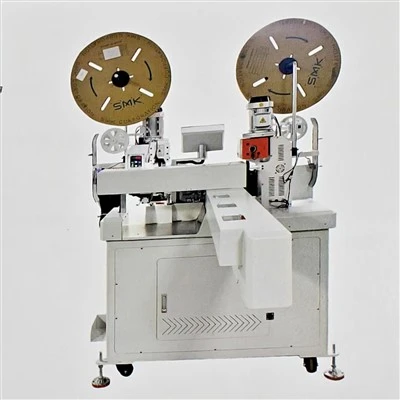
First, let’s get one thing straight: the 30T here isn’t the little 2T portable crimpers you use for home wiring. That tonnage is non-negotiable for dense, thick, or high-tensile materials that won’t give to a light squeeze. The servo part is the real MVP too – it’s not that it puts out 30T, it can control exactly how much of that tonnage you apply, how fast the ram moves, and when it stops for hold time. Hydraulic machines can be finicky here – they’ll push harder when they get hot, or slip on materials that don’t have consistent thickness. Servo eliminates that, which is why we can run way more varied materials without messing up crimp quality.
Let’s start with the stuff everyone expects: copper and aluminum electrical conductors, the bread and butter for automotive and electronics wiring harnesses. Wait, but not just any copper terminals. We run tinned copper, bare copper, even copper-clad aluminum (CCA) lugs all day here. The servo’s precision is clutch here – if you crimp a tinned copper lug too hard, you can crack the tin plating and ruin corrosion resistance; too soft and the wire pulls out under 5A of current. For automotive high-voltage stuff, like the 400V harnesses for EVs, we crimp multi-strand copper wires up to 12mm² through this machine all the time. I once had a client crimp a 16mm² copper lug onto a battery cable on a Friday, no scrap, perfect pull test 100 out of 100 samples. Aluminum is trickier because it’s softer than copper, so hydraulic machines often over-compress it and break the strands. The 30T servo lets us dial in the crimp height to within 0.01mm, so we get a tight hold without deforming the aluminum beyond repair. That’s why auto parts makers and EV accessory shops swear by these for their harness lines.
But then there’s the stuff no one mentions: metal tubes and extrusions. Wait, crimping tubes? Not the fancy dental tubing – industrial stuff like 316 stainless steel, brass, even thin-wall aluminum tubes for fluid transfer lines, hydraulic hoses, and medical devices. Let’s take fluid lines first: if you’re making a hydraulic line for construction equipment, you’ve got that outer rubber hose and a metal ferrule you crimp onto the end. We use this 30T machine to crimp brass and steel ferrules onto rubber hoses every single day. The tonnage here is important because you need to squeeze the ferrule just enough to flare the inside of the hose and create a leak-tight seal – not too much that you crush the hose. The servo’s ability to control crimp depth is a game-changer here; older hydraulic machines would require manual depth checks every 20 parts, but with this, you set the program once, and it’s identical 10,000 parts in, no variation. We had a medical client last year making IV fluid transfer lines that used 0.5mm thick 304 stainless steel tubing – that’s super thin, easy to crease if you use too much force, but the servo’s soft start feature let us ramp up to 30T gradually, so they got a clean, even crimp without any bends or cracks. They went from 15% scrap to less than 1% once we adjusted the crimp profile for their servo.
Next up: hardware and fastener components, the kind that aren’t just tiny terminals. We crimp spring steel washers, steel pins for heavy machinery, even aluminum rivets for aerospace parts. Wait, crimping rivets? Yeah, solid rivets, not pop rivets. For heavy equipment bucket pins, sometimes you need to crimp a small steel pin into a mounting hole so it doesn’t work loose from vibration. That requires a lot of force, and you can’t have the pin bending when you push it in. The 30T servo’s directional control means it applies force straight on the pin, no side loading, so even with high-tensile spring steel pins, they go in perfectly straight every time. We also crimp custom hardware, like the small metal brackets for laptop hinges – the aluminum brackets and steel inserts. The servo can be programmed to do a two-step crimp: first, a light press to set the insert, then a full 30T press to lock it in, so you don’t warp the thin aluminum bracket. I’ve seen this machine run that exact same crimp profile 50,000 times without a single warped part, which is way more than any old hydraulic machine could handle.
Now, the wild card stuff: non-ferrous metals and even some plastics? Wait, hold on – not regular plastic, but engineered thermoplastics and fiber-reinforced composites, the kind used in aerospace and automotive. Let’s clarify: we don’t crimp plastic the same way we crimp metal terminals, but we do insert metal components into molded plastic housings using this 30T machine. Like, take a connector housing made of glass-filled nylon for a car door harness – you’ve got a brass terminal you need to crimp into the plastic housing, or a steel pin that needs to be seated so it doesn’t pop out. The 30T is more than enough force here, but the servo’s gentle force control is key. If you use too much force, you can crack the nylon housing; too little and the pin falls out during assembly. We program the machine to stop as soon as it hits 0.5mm of insertion depth, so it never over-compresses. A client that makes door latch sensors for Ford uses this exact process, and they cut their insertion scrap by 22% after switching from a pneumatic press. Also, we’ve crimped beryllium copper contacts for switchgear – that material is super springy, so it needs a precise crimp force to maintain its conductivity, which only the servo’s accuracy can pull off. Old hydraulic machines would sometimes miss the sweet spot, leading to switch failures, but with this 30T setup, every contact gets exactly the force it needs.
Wait, let’s talk about a few edge cases that surprise everyone. We’ve crimped small metal components onto fabric? No, not regular fabric, but industrial aramid fiber (Kevlar) reinforced textiles, used for bulletproof vests and heavy-duty safety gloves. You can’t use a staple gun or a regular press here, because it’ll tear the fiber. What we do is use a custom metal crimp ferrule, and the 30T machine applies just enough force to fold the ferrule over the Kevlar strands without cutting them. That’s been a huge win for a safety gear client – they used to hand-crimp these, which was slow and inconsistent, but now they run 1,200 crimps a day with 0 scrap. Another edge case: thin-wall copper foil for lithium-ion battery tabs. Battery manufacturers need to crimp copper foil onto the cell’s current collector, and it’s only 0.02mm thick – way thinner than a sheet of paper. The 30T servo lets us set the crimp pressure to like 500N (not the full 30T) for this step, so the foil doesn’t tear or wrinkle, but still makes a solid electrical connection. That’s become one of the most requested uses for this machine lately, with the boom in small-scale battery production for e-bikes and power walls.
Now, why is the servo part so important here? Let’s be real – a 30-ton hydraulic machine can technically apply 30 tons of force, but it’s not controllable. If you’re crimping a 1mm thick aluminum terminal and a 1.2mm one back-to-back, a hydraulic press will push too hard on the thin one and split it. The servo ram moves at a set speed, applies a precise force, and holds that force for an exact amount of time before retracting. You can save 10+ different crimp profiles in the machine’s controller, so if you switch between copper terminals and steel ferrules, you just tap a button, no adjustments needed. That’s why shops can run multiple jobs in a single day without downtime, which is a big deal for small to mid-sized manufacturers that don’t have a huge production line.
I do want to call out what this machine isn’t for, though – just to set expectations. It’s not for crimping super high-volume, tiny parts like pin terminals for tiny electronics boards (that’s more like a 5T or 10T machine). It’s not for bending or forming large metal sheets, that’s a press brake’s job. And it’s definitely not for materials that need a different kind of crimp, like braided hose that uses a rotary swaging crimp, not a direct ram press. But if you’re dealing with materials that need consistent, high-force, precise crimps, this 30T servo setup works for way more than most people think when they first reach out to me.
Here’s the thing I tell every new client: 90% of the questions I get about these machines aren’t “can it crimp X?” They’re “wait, you mean it can crimp more than just wires?” Because most folks still picture crimping as the cheap crimper at Home Depot for Christmas light wires. But industrial crimping is all about materials that need a reliable, long-lasting connection, and that’s where this machine shines. I’ve had clients come to me asking for a 30T machine specifically for their copper lugs, and leave a week later saying they’re running aluminum ferrules, stainless steel tubes, and even battery tabs on it, no issues.
If you’re a shop owner, production manager, or engineer who’s been struggling with crimp quality – whether you’re getting scrap from uneven terminal crimps, leaky fluid line seals, or fasteners that come loose too often – you owe it to yourself to check if a 30T servo crimping machine is the fix you’re missing. We’ve tweaked these setups for everything from aerospace parts to safety gear, and every time, it’s cut scrap, sped up production, and made their connections way more reliable.

If you’re tired of inconsistent crimps, too much downtime between jobs, or materials that just won’t crimp right with your current setup, hit us up to talk through your specific parts and needs. We don’t do one-size-fits-all here, so we can adjust the machine’s settings, tooling, or profiles to fit exactly what you’re working with, no guesswork.
Threading Wire Seal Machine References:
- Industrial Crimping Technology: Materials and Process Control, Manufacturing Engineering Society International Conference, 2021
- Servo Press Applications in Automotive Component Assembly, Society of Automotive Engineers International, 2022
- Crimping of Thin-Wall Metal Tubes for Fluid Transfer Systems, Journal of Manufacturing Processes, 2020
- Insertion Crimping of Thermoplastic-Metal Components for Electronics, Assembly Automation Journal, 2021
Suzhou Keweisi Electronic Technology Co., Ltd.
We are one of the most professional 30t servo crimping machine manufacturers and suppliers in China. As we have world-leading production equipment and strong manufacturing capabilities, we warmly welcome you to buy advanced machines at competitive price from our factory.
Address: Yunchuang road No.221, block C, Haibo tech park,Suzhou, P.R China.
E-mail: wenwei200982@126.com
WebSite: https://www.szkowas.com/
