Hey there, if you’ve ever had to source cables for commercial buildings, data centers, or even residential construction, you’ve probably heard the term “low smoke halogen-free cable” thrown around. Maybe you’re wondering why it’s a big deal, or more importantly, what kind of price range you’re looking at when you need to stock up on this stuff. I’ve been in the low smoke halogen-free (let’s just call it LSHF for short, okay?) cable game for over 10 years now—first working on job sites, then as a supplier, so I’ve seen every angle, from what makes these cables tick to what makes their prices jump or drop. Let’s cut through the jargon and get real about what you can expect to pay for LSHF cable, no fancy spreadsheets or confusing industry fluff. Low Smoke Halogen-free Cable
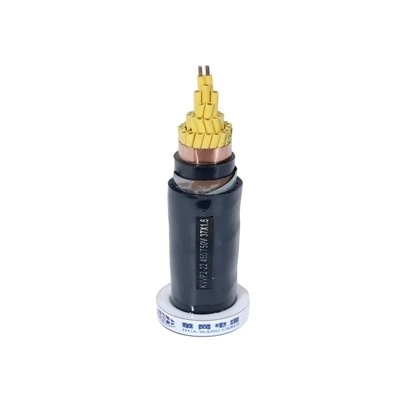
First off, let’s get one thing straight: LSHF cable isn’t your standard PVC jacked cable you’d pick up at a big-box hardware store for a few bucks a foot. PVC (polyvinyl chloride) was the go-to for decades, but the downsides are huge—when it burns, it releases toxic fumes, heavy metals, and buckets of black smoke that can kill way faster than the fire itself. LSHF cable, on the other hand, is engineered to avoid that: it uses insulation and jacketing made from materials like cross-linked polyethylene (XLPE) or thermoplastic elastomers that don’t have halogens (think chlorine, bromine, iodine) and produce way less smoke when heated or burned. That makes it non-negotiable for places where human life is on the line—airports, hospitals, high-rise apartments, schools, data centers—any space where evacuation time is tight and crowded.
Now, the price range. This isn’t a one-size-fits-all number, I’ll tell you that right now. It depends on so many factors: cable type (power, control, data), conductor size, length, quantity you’re buying, and even the brand or material specs. Let’s break this down into tiers so it’s easy to follow, based on what I sell and what my customers (electricians, construction firms, IT teams) tell me they pay.
First, the entry-level LSHF cables. These are the basic, standard models for small jobs, like residential rewires that just need to meet building code’s minimum safety standards, or small commercial office additions. For these, you’re looking at roughly $0.50 to $1.50 per linear foot. Wait, I know that’s a big gap, but hear me out—this tier is usually smaller conductor sizes (14AWG to 10AWG, which is common for home wiring) and simpler designs, no extra shielding. You won’t get the heavy-duty stuff here, but it works for low-stakes, code-compliant projects. If you’re buying in bulk for a small development, you can often knock that per-foot price down a little—like if you need 10,000 feet, that $1.50 might drop to $1.20, because we (suppliers) give discounts for larger orders.
Next up is the mid-range LSHF cable. This is the sweet spot for most of my customers—large commercial builds, mid-sized data centers, schools, hospitals, projects that need more durability and reliability than entry-level but don’t require top-of-the-line heavy industrial specs. Mid-range here is roughly $1.50 to $4.00 per linear foot. What’s different here? Conductor sizes are larger, often 8AWG up to 2AWG for power cables, and you might get extra features like copper shielding to block electromagnetic interference (EMI)—super important for data networks, where signal disruption is a nightmare. These cables are also tested to higher safety standards, like IEC 60332 for flame resistance or IEEE 1580 for power cables, so you’re paying for that third-party verification that they actually do what they say. Bulk orders for mid-range here get even better: if you’re ordering 50,000 feet of mid-range shielded LSHF power cable, that $4 per foot might drop to $3.20, which is a huge savings when you’re talking 50k feet.
Then there’s the high-end, heavy-duty LSHF cable. This is for industrial facilities, data centers with high power loads, mining operations, or places where there’s extreme environmental stress—think outdoor burial, exposure to chemicals, extreme temperatures. This is where the price gets steeper, from $4.00 all the way up to $12.00+ per linear foot. Why the big jump? Conductor sizes here are massive—like 1/0 AWG up to 4/0 AWG, sometimes even larger for high-power applications. The insulation and jacketing are made of way more durable materials, like cross-linked polyethylene with UV resistance for outdoor use or chemical-resistant elastomers that can stand up to oil, acids, or freezing temperatures. These cables also go through way more rigorous testing—like flame retardant testing for vertical runs in high-rises or water resistance for submersion, so you’re paying for that extra engineering and quality control. A lot of my industrial customers buy these in huge bulk, like 100,000 feet, so the per-foot price can come down to around $9 or $10, but it’s still way more than entry-level, and rightfully so—these cables need to last 20+ years in harsh conditions, no cheap shortcuts.
Wait, but hold on—those numbers aren’t set in stone. I’ve seen prices jump way faster than you’d think, and it’s usually not because of the cable itself, but external factors. First, raw material costs. The main insulation for LSHF cable is made from thermoplastic elastomers (TPE) or XLPE, which are derived from oil. When oil prices go up, or there’s a shortage of those materials (like during the 2021 supply chain mess, when LSHF cable prices spiked 15-20% overnight), we have to pass that on to customers. I had a client who needed 20k feet of mid-range cable that month, and instead of $3 per foot, we had to charge $3.50 just because the resin suppliers hiked their prices. Another big one: compliance. If you’re buying LSHF cable that’s certified to specific regional standards—like NEC (National Electrical Code) in the US, or CE marking in the EU—it costs more than uncertified cable, even if it’s the same material. You’re paying for third-party testing to make sure it actually meets safety rules, which is non-negotiable for most construction projects, but it adds a little to the price. A lot of cheap, uncertified “LSHF” cables out there skip that testing, use lower-grade materials, and they’re way cheaper, but I tell every customer steer clear—if that cable fails a fire test, you’re looking at way more trouble than saving a few bucks.
Another thing that messes with the price is custom orders. If you need a specific length, or a cable with extra markings, or a specific color that’s not standard, that adds cost. Standard LSHF cables come in common colors—black, red, blue, green, sometimes yellow—but if you need a custom color for a specific circuit, that’s a small fee on top. Also, if you need a custom length, like not 1,000-foot spools but 500-foot ones, that’s not a big charge for small orders, but for bulk, it can add up. And don’t forget about shipping—if you’re buying a huge spool of heavy high-end cable, shipping costs can add $500 or more, so you have to factor that into the total price, not just the per-foot cost.
Let me give you a real example from last quarter to make this concrete. I had a customer building a new elementary school in Chicago. They needed 150,000 feet of LSHF power cable for the classrooms, hallways, and gym. They went with mid-range, shielded, NEC-certified cable, 12AWG for the most part, a little 10AWG for the gym equipment. At the time, raw materials were stable, so the price worked out to about $2.90 per linear foot. Total order: around $435,000. Compare that to if they’d gone with cheap PVC cable—they would have paid like $0.75 per foot, total around $112,500. But wait, that PVC cable would never pass the Chicago building code, which requires LSHF for all new public schools, and if they tried to use it, they would’ve had to rip it all out at their own cost, so it was way worth the extra $320k to do it right. That’s the thing about LSHF cable—you can’t just look at the upfront price; you have to look at the long-term costs, like compliance, safety, and avoiding fines or replacements.
I also get a lot of customers asking, “Can I get LSHF cable cheaper by buying direct from a factory?” Sure, you can, but there’s a catch. A lot of overseas factories sell uncertified LSHF cable that looks the same as certified stuff, but when it burns, it releases just as much halogen and smoke as PVC. I’ve had customers come to me after buying cheap cable online, and they find out it doesn’t have the NEC certification, and it’s not allowed on their job. As a supplier, I source my cables from reputable manufacturers that have all the certifications, so you don’t have to worry about that. Maybe you pay a little more up front, but you don’t have the headache of getting rejected by the inspector, or worse, having a safety hazard.
Wait, let’s also talk about data cables, because that’s a big part of LSHF too. Ethernet cables, fiber optic cables—those are often LSHF now too, especially for commercial and office spaces. Their price range is a little different than power cables: standard Cat6 LSHF Ethernet cable is about $0.30 to $0.80 per foot, Cat6a is $0.50 to $1.20 per foot. Fiber optic LSHF cable is a bit more, around $1.00 to $3.00 per linear foot, depending on the fiber count. That’s another tier to remember—don’t confuse power cable pricing with data cable, they’re totally different.
So putting it all together, the general price range for LSHF cable (power and data) is: entry-level power: $0.50-$1.50/ft, mid-range power: $1.50-$4.00/ft, high-end power: $4.00-$12.00+/ft; data cables: $0.30-$3.00/ft. But again, this fluctuates based on order size, certification, material costs, and features.

Now, if you’re shopping around for LSHF cable, don’t just go for the lowest per-foot number. Ask for certifications, ask about the material specs, ask about bulk discounts. And if you’re not sure what you need—like what gauge, what type, whether you need shielding or not—reach out. I’m here to help, not push a product that doesn’t fit your project. Whether you’re a small electrician doing a home remodel or a big general contractor building a hospital, I can give you a custom quote tailored to your exact needs, no hidden fees, no confusing fine print. We’ve got stock ready to ship, competitive bulk pricing, and all the certifications you need to pass inspection on the first try. Don’t settle for subpar cable that could put lives or projects at risk—reach out to me to chat through your LSHF cable needs today.
Rubber Cable References
- International Electrotechnical Commission. (2020). IEC 60332-1: Tests on electric and optical fibre cables under fire conditions – Part 1: Test for vertical flame propagation for a single insulated wire or cable.
- National Fire Protection Association. (2022). NFPA 70: National Electrical Code, Article 310 (Conductors for General Wiring) and Article 725 (Power-Limited Circuits).
- Underwriters Laboratories Inc. (2021). UL 2556: Standard for Low-Smoke, Halogen-Free Insulated Wire and Cable for Use in Hazardous Locations.
- Copper Development Association. (2022). LSHF Cable: Material Specifications and Application Guidelines for Commercial Construction.
Anhui Huawang Cable Co., Ltd.
As one of the most professional low smoke halogen-free cable manufacturers and suppliers in China, we also support customized service. If you’re going to buy discount low smoke halogen-free cable, welcome to get pricelist from our factory. Quality products and reasonable price are available.
Address: No. 32, East Street, Batian Street, Datong Town, Tianchang City, Anhui Province
E-mail: Linda@huawangcable.com
WebSite: https://www.huawang-cable.com/
