Hey there, I’m Jake, and I’ve been grinding as an aquatic feed composite bag supplier for almost a decade now. One of the most frequent questions I get from fish feed mill owners—whether they’re running a tiny regional operation in Iowa or a mid-sized facility in Thailand—is, “What’s the minimum order quantity (MOQ) for your bags?” It’s not a one-size-fits-all answer, and if I just spit out a random number like 5,000 or 20,000, I’d be doing you (and my own team) a huge disservice. Let me break this down like I’d break it down to a new client sipping bad office coffee in my warehouse break room. Aquatic Feed Composite Bags
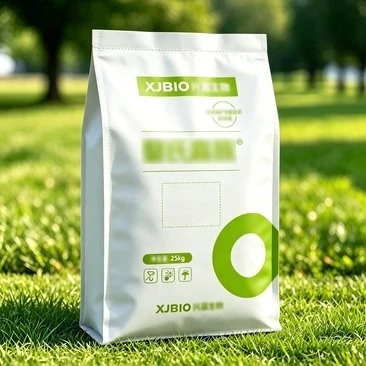
First off, let’s get one thing straight: aquatic feed bags aren’t the same as the cereal bags you grab at the grocery store. Those are thin, printed, made for shelf display, and hold 12 ounces. Our bags have to handle 25, 50, even 100 pounds of feed—think floating pellets, sinking pellets, shrimp feed that’s got fine particles that want to leak, or catfish feed that’s a bit more abrasive. They get stacked in hot, humid warehouses, tossed around on cargo ships, and left in the back of a pickup in 90-degree weather. So every part of the bag matters, and that directly ties into MOQ.
Now, MOQ isn’t some arbitrary number my accounting team pulled out of a hat. It’s rooted in three main things: our production setup, the specs you need, and the logistics of making a custom bag that works for your feed. Let’s start with production because that’s the backbone. My factory runs roll-fed flexographic printing presses—you know, the ones that print up to 8 colors onto the plastic and film layers of the composite bag. Changing the print roll, the film, or the liners isn’t like swapping a shirt; it takes time, and every setup change costs us money. If a client wants a super small order, say 1,000 25-pound bags, we’d have to run the press for way longer than the actual printing and bag-making part, just to set everything up. That extra setup time eats into other orders we could be running, so we can’t just absorb that cost without passing it on, which would make the bags way more expensive than they’re worth.
That said, the old “one MOQ fits all” rule died a long time ago, even for small suppliers like me. Let’s talk about base MOQs first, before we get into variable stuff. For a standard, off-the-shelf bag—no custom print, no special liners, just the usual 50-pound composite bag for catfish feed or generic shrimp feed—our base MOQ is 10,000 units. Why? Because that’s the sweet spot where setup costs are spread out enough that we can keep the price fair, and it’s enough material to get our press running efficiently for a single run. If you need smaller runs for a test batch of new feed, like trying out a new formula and only need 3,000 bags, I’m not going to say no—we just tack on a small rush fee, like 15% to 20% over the base price, to cover that extra setup time. That’s a win-win, right? You don’t have to tie up cash in 10,000 bags you might not use for 6 months, and we still make a little instead of losing money on a tiny run.
Now, the part that trips most people up: customizations, and how they jack up (or lower, sometimes) the MOQ. Let’s start with custom print. If you want your logo, your feed’s name, your contact info, and maybe a “floating” or “non-GMO” claim printed on the bags, that adds a custom print setup fee on top of the MOQ. If you only need 5,000 custom printed bags, the MOQ jumps to 15,000, because we can’t justify running the press to set up your custom plates for just 5,000 bags—we’d lose money on the plates alone. But if you need 20,000 custom bags, we can roll that setup cost into the per-unit price, so you don’t even notice it. That’s why when I talk to a client, the first thing I ask is: “How much custom stuff do you need?”
Then there are the special specs, which are huge for aquatic feed. A lot of people don’t realize that shrimp feed needs a water-resistant liner so it doesn’t dissolve in a truck’s rain puddle, tilapia feed needs UV-resistant film to sit in a warehouse without fading, and catfish feed needs a reinforced bottom so it doesn’t tear when you drop it off a pallet. If you need a liner that’s not standard—like a food-grade HDPE liner for organic shrimp feed—we have to source that special material, which has its own minimum order from our suppliers. So if you need a special liner, our MOQ goes up a bit, because we have to order at least, say, 500 linear feet of that liner material, which translates to a few thousand bags. I had a client last year who was making organic salmon feed and needed a compostable liner—super niche stuff. His MOQ ended up being 12,000 bags, not because we wanted to nickel and dime him, but because the compostable liner supplier only sells in bulk, and running the press for a smaller order would have made the bags so expensive he couldn’t sell his feed for a profit.
Logistics also plays a big part, especially if you’re ordering from overseas (wait, but I’m a domestic supplier, so that’s different for folks in North America). If you’re in the US, and you need your bags shipped to a port in Texas or Florida, shipping full truckload (FTL) is way cheaper than less-than-truckload (LTL). So if your order is below the LTL threshold, your shipping cost per bag jumps, which makes the total order less worth it for both of us. For example, if you order 8,000 bags, that’s an LTL shipment, and you might pay $0.15 more per bag in shipping than if you ordered 12,000 bags, which fills a truck. So even if we could technically do an 8,000 order, it’s better for you to bump it up to hit FTL, because that saves you money overall.
Wait, I should also talk about exceptions, because I’m not a robot. I’ve had small, family-owned feed mills with only a couple of employees come to me, just starting out, who need 5,000 bags for their first batch of feed to test in local ponds. I don’t charge them a crazy rush fee, because I get it—you’re not a giant corporation with a 6-month forecast and a warehouse full of cash. As long as it’s not a super custom order, I can work with you on lower MOQs, maybe even 5,000 units, without adding a huge fee. The key here is communication. If you tell me up front that you’re a new operation, testing a new feed line, or have a tight budget, I’ll adjust. I hate the rigid “no exceptions” rule that a lot of big suppliers have—they just see numbers, not people trying to build a business.
I also get a lot of questions about why MOQs don’t scale linearly. Like, “If 10,000 is X, why is 20,000 not just 2X?” Because there are economies of scale in printing and bag making. Once we have the press set up for a certain size and material, running more units doesn’t add much cost per bag. The setup is the big fixed cost. So 20,000 bags might only be 1.6 times the cost of 10,000, not 2 times. That’s why it’s often cheaper per unit to order a little more than you think you need, instead of splitting orders over time. For example, if you need 10,000 bags over 6 months, ordering 10,000 in one run will save you a few thousand dollars in setup and shipping costs, compared to ordering 5,000 twice. That’s a tip I give every client—don’t underestimate that.
Let me also touch on what happens if you go below MOQ. A lot of new clients think, “I’ll just order a few hundred bags to test, that way I don’t waste money.” But here’s the thing: if you order 500 bags, we still have to set up the press, source the material, and run the full production for that size. The per-unit cost for 500 bags would be so high—like, 3 to 4 times more than the base cost—that you’d probably pay more for just the bags than you make from selling the feed in them. That’s not a deal that makes sense for either of us. I’d rather you wait until you have enough volume to order the minimum, or adjust your order so we can hit that sweet spot, than sell you something that’s a ripoff.
Oh, and size matters too! A 25-pound bag is way smaller than a 100-pound bag, so you can fit way more 25-pound bags on a pallet, which means our production run can fit more on a roll, cutting down on waste. So the MOQ for 25-pound bags is often lower than for 100-pound bags. Last month, a client wanted 50-pound bags for catfish feed—his MOQ was 12,000, but the guy who wanted 25-pound tilapia feed got away with 8,000. That’s another variable most people don’t consider; bag size directly impacts MOQ because of how we load the production line.
Wait, should I mention recent changes? Like, post-pandemic, a lot of plastic and film prices have fluctuated, so MOQs have gone up a tiny bit for super custom stuff, because suppliers are more cautious about holding excess material that they can’t sell. But for standard, basic bags, MOQs have stayed pretty consistent over the last year. I try to keep my MOQs as low as possible without cutting corners, because I want repeat customers—if a client only needs 10,000 bags now, I want them to come back when they need 50,000 later, not go to a competitor who’ll charge them an arm and a leg for a smaller order.
Let me wrap this up with a few actionable tips, because no one wants to leave a blog post with more questions. First, before you hit me up for a quote, know what specs you need: size, weight, print, liners, any special features (like tear notches, vent holes for bulk storage). Second, be honest about your volume and timeline—if you need bags in 2 weeks, that’s a rush order, and MOQ will be higher, but if you can wait 6 weeks, we can do a smaller run. Third, don’t be afraid to negotiate if it’s your first order or you have a small operation. I’m not going to lowball you, but I will work with you if you’re transparent about your needs.
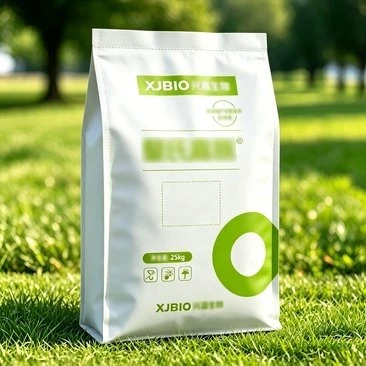
At the end of the day, MOQ for aquatic feed composite bags isn’t a barrier to entry. It’s a way to make sure we’re both getting a fair deal: I can run my factory efficiently, keep prices reasonable, and deliver a quality product that won’t tear or leak mid-shipment, and you get bags that work for your feed, your budget, and your operation. If you’re curious about a specific quote, or want to run numbers for your next feed launch, hit me up—no pressure, just a chat about what you need.
Livestock Feed Bags References:
- Aquaculture Feed Packaging Market Report, 2023-2030. Global Market Insights Inc.
- Flexible Packaging Production: Efficiency and MOQ Best Practices. Packaging World, 2022.
- Sustainable Aquatic Feed Packaging: Material Sourcing and Volume Requirements. FAO Fisheries and Aquaculture Department, 2021.
Zhejiang Xifeng Packaging Co., Ltd.
We are one of the most experienced aquatic feed composite bags manufacturers and suppliers in China. With a professional production team, we offer a wide range of products with superior quality. Please feel free to buy bulk aquatic feed composite bags at competitive price from our factory. We also accept customized orders.
Address: Xiaojiang Town, Pingyang County, Wenzhou City, Zhejiang Province, China
E-mail: zjxifeng@126.com
WebSite: https://www.xifengpackaging.com/
