If you’ve ever ordered a cardboard dump bin from a supplier and stared at a pallet wrapped in double-stretched plastic, or stood squinting at a half-assembled bin that’s too big to heft alone, you know the question that hits you mid-unbox: how do I actually transport this thing without turning it into a crumpled, useless mess before it even reaches its first job? For three years, I’ve run a small, local cardboard dump bin company—we supply these bins to construction sites, event venues, office parks, and even small businesses that can’t swing a permanent dumpster rental—and I’ve fielded this exact question more times than I can count, from solo contractors with a pickup truck to operations managers coordinating a 12-bin drop for a city-wide renovation. Today, I’m pulling back the curtain on what works, what doesn’t, and the tricks I’ve learned to make transporting these large, lightweight (when folded) workhorses a whole lot less stressful. Cardboard Dump Bin

First, let’s get one critical thing straight: large cardboard dump bins aren’t like moving a cardboard box. A standard full-size bin from our inventory measures 48 inches long, 40 inches wide, and 55 inches tall when assembled. When flat, it’s a single corrugated board with pre-scored fold lines, gusseted corners, and reinforced side panels to hold up to 1,500 pounds of general waste, construction debris, or event trash. The biggest mistake I see people make when transporting these is assuming size equals weight—until they get the bin home and realize it’s 80% empty space, and a gust of wind can turn the whole thing into a flying piece of cardboard. That’s where preparation before you even load the bin starts.
Let’s break this down by the most common transport scenarios, because how you move a single bin alone is very different from moving a stack of 20 for a big order, and very different from moving an already assembled bin that’s ready to go to a job site.
Scenario 1: You’re moving 1 to 3 flat bins in a passenger vehicle or small pickup. This is the most frequent question I get, usually from small contractors or property managers picking up an order on their way back from a supply run. The first rule here: never stand flat bins upright in the bed of a small pickup or the back of an SUV. I’ve seen too many customers do this, and by the time they hit the first stop sign, half the stack is leaning, gussets are popping loose, and one bin is already torn. Why? Flat large bins are designed to lay flat; their structural stability comes from being unfolded, not stood on their narrow edge.
The fix here is simple: layer them flat, like you would a stack of thick foam boards, in the direction of your vehicle’s length. For an SUV, that means folding down the back seats, opening the rear hatch, and sliding each bin in front of the other until the stack is the length of the cargo area. For a small pickup, lay them in the bed, front to back, so the weight is distributed evenly between the cab and the tailgate. If you have more than two bins, place a thin, flat piece of plywood or even an old moving blanket between the top bin and the one below it to prevent the top edge from digging into the corrugation, which can cause tears during turns or speed bumps.
Now, securing them. This is non-negotiable for small loads. If you’re in an SUV, use two cargo straps: one to loop around the front header of the bin stack (the top edge of the flat board that will become the bin’s front panel) and tighten to the inner cargo anchors on either side of the SUV. The second strap goes around the back edge of the stack, just above the rear hatch, to prevent the whole thing from sliding forward when you brake. For pickups, never use rope. Polypropylene cargo straps with a cam buckle are worth the $10 investment—they don’t stretch as much as rope, and they won’t fray on the sharp edges of corrugated cardboard. Run one strap lengthwise across the top of the stack, tying to the left and right stake pockets of the truck bed, and a second strap crosswise, looping over the middle of the stack to keep it from shifting side to side. I also always tell customers to leave the tailgate up when moving bins in a pickup, even if the stack is shorter than the bed—tailgate rails can catch wind and tear edges if the stack shifts back.
Scenario 2: You’re moving a fully assembled bin, or a stack of assembled bins, to a job site. This is the next level, and it’s where most people run into trouble because assembled bins are bulky, awkward, and surprisingly heavy when they’re full—wait, no, even empty assembled bins weigh about 15 pounds, but their footprint is big, so they take up a lot of space and are hard to grip. If you’re transporting a single assembled bin, the first step is to fold down the front and back flaps of the bin (the ones that will become the access panels for trash) so they hang loosely from the sides. This cuts the overall width of the bin by half, making it way easier to lift and maneuver. I’ve had contractors try to lift a fully assembled bin with all four flaps standing, and they end up yanking a side panel loose because the flap adds 10 inches of unbalanced width.
Once the flaps are down, how do you lift it? Don’t try to lift by the top edge of the side panels—corrugated cardboard can only support so much tension, and you’ll tear a hole before you get it off the ground. Instead, slide your hands under the bottom edge of the bin’s side panels, or grip the reinforced gusset corners (the thick, folded cardboard tabs at each corner that we add to every bin to boost structural stability). These gussets are designed to handle lifting pressure, so they won’t tear. For solo transport, if you have a ½-ton pickup, you can slide the bin into the bed at a slight angle, so the long side rests against the cab and the short side hangs just over the tailgate. For two people, one person grabs the left gusset corner, the other grabs the right, and you lift straight up—no twisting, which can warp the side panels.
If you’re moving multiple assembled bins, the key is stacking them correctly, not just piling them on top of each other. Never stack an assembled bin directly on top of another empty assembled bin. The bottom bin’s top edge is a thin, single layer of corrugation, and the weight of a bin on top will crush it. Instead, lay a flat, unassembled bin (or a piece of plywood, if you have it) between each assembled bin. The flat bin’s thick, rigid base will distribute the weight evenly, and it acts as a barrier to prevent the bottom of the upper bin’s side panels from catching on the bottom of the lower bin’s top edges. We supply free small pieces of plywood to regular customers who order more than 5 bins at a time, and I can’t tell you how many times that simple step has saved a bin from being ruined mid-transport.
Scenario 3: You’re moving a large order—10 or more bins, stacked on a pallet. This is where most of my business’s transport support comes in, because when a construction site orders 20 bins for a 6-month project, they’re not hiring a mover; they’re renting a forklift or using their truck’s liftgate to unload. The good news is that we wrap every pallet of our bins with heavy-duty plastic stretch wrap, and we place a layer of corrugated cardboard between every two layers of bins on the pallet to prevent shifting. But there are still best practices for the customer to follow when moving a pallet of bins, whether you’re picking it up yourself or having it delivered.
First, if you’re picking up a pallet of bins, make sure your vehicle has a liftgate or a truck that can handle a 500-pound pallet (the average pallet of 20 bins weighs around 450 pounds, with the pallet and wrap). Never try to lift the pallet by the top stretch wrap—this is the #1 cause of torn bins during transport, because the wrap is designed to keep the stack together, not support its entire weight. Instead, use a pallet jack or a forklift to lift the pallet by the standard 4-way entry slots on the bottom of the pallet. Once the pallet is in your truck, secure it with four straps: one at the front, one at the back, and one on each side, tied to the truck’s interior anchors. If you don’t have interior anchors, run two straps lengthwise across the pallet, pulling tight, to keep it from sliding forward during stops.
Another tip for long hauls with bin pallets: if you’re driving more than 2 hours, take 5 minutes every hour to check the stretch wrap and the straps. I once had a customer drive 3 hours from our warehouse to a job site, and when they arrived, the pallet had shifted so much that one bin was hanging off the edge, and the side panel was torn beyond repair. That could have been avoided with a quick mid-check, especially if it’s windy or you’re driving on rough roads, which put extra stress on the straps and the pallet.
Now, let’s talk about the biggest mistake I see customers make at delivery time, and how to avoid it even if you didn’t plan for transport ahead of time. A lot of people assume that once the bin is at the job site, they can just leave it on the back of the truck and drag it off—but that’s a quick way to tear a side panel or bend a reinforced corner. The right way is to slide the bin forward on a flat surface (like the bed of the truck, or a plywood sheet) rather than lifting it. If you don’t have a plywood sheet, a heavy-duty moving blanket works too—slide the blanket under the bin’s side edge, and use it to pull the bin forward without dragging the cardboard, which can scratch or tear. If you’re alone and need to move a bin a short distance, you can also lift one gusset corner at a time, rolling the bin forward as you go, like you would a large suitcase. This works for flat bins too: if you have a stack of flat bins and no way to lift them, you can roll them along the ground, front to back, keeping the stack aligned, and they won’t tear as long as the ground is smooth (no gravel or sharp rocks).
Wait, I should also mention the weather factor, because cardboard is sensitive to moisture, which can weaken the corrugation and make it tear or collapse during transport. If you’re transporting bins in the rain or snow, cover the entire stack or pallet with a heavy-duty tarp, and make sure the tarp is secured so it doesn’t flap in the wind and tear the bin edges. I once had a customer order 10 bins in the middle of a light rain, and they forgot to cover them. By the time they got to the job site, the bottom two bins were so waterlogged that they couldn’t hold the weight of debris, and they had to come back and reorder, delaying their project for two days. That’s a $500 mistake, all because of a $10 tarp.
Let me circle back to something I always tell new customers: these bins are designed to be disposable, but they’re not indestructible, and a little planning during transport saves everyone time and money. As a supplier, my main goal is to deliver a bin that’s ready to use, not one that’s half torn before it even leaves our warehouse. That’s why we include free transport tips with every order, but I’ve learned that people don’t always read the fine print, so I’m putting it all here today.
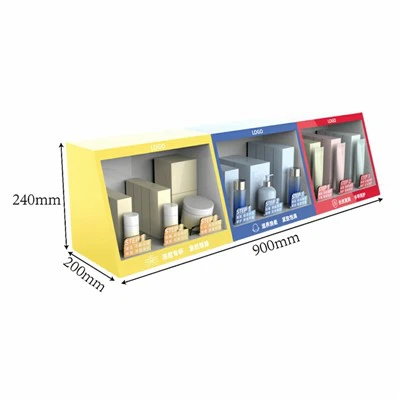
If you’ve got a big order coming up, or you’re not sure how you’re going to move your next shipment of cardboard dump bins, don’t hesitate to reach out to our team for tailored advice. We’ve worked with everyone from solo contractors with a small pickup to large property management companies coordinating multi-site orders, and we can help you figure out the best way to load, secure, and transport your bins without damage. There’s no question too small, and we’re always happy to help make the process as easy as possible for you.
Freestanding Display Stand References:
- Corrugated Packaging Council. (2022). Best Practices for Handling and Transporting Industrial Cardboard Containers. Retrieved from industry packaging guidelines.
- National Waste & Recycling Association. (2021). Field Guide to Portable Waste Containers: Handling and Transportation Standards. Retrieved from waste management industry resources.
- American Society of Safety Professionals. (2020). Manual Material Handling for Lightweight, Bulky Industrial Supplies. Retrieved from workplace safety guidelines.
Guangzhou Guangjie Display Products Manufacturing Co., Ltd.
We’re well-known as one of the leading cardboard dump bin manufacturers in China, also support customized service. Welcome to buy bulk high quality cardboard dump bin at competitive price from our factory. If you have any enquiry about pricelist and quotation, please feel free to email us.
Address: No. 16-1 Lilv Road, Dashi Street, Panyu District, Guangzhou City, Guangdong Province
E-mail: guangjie_dp888@163.com
WebSite: https://www.gjdisplaystand.com/
