If you’ve ever stepped back to look at how GPS tracking has evolved over the last decade, you’ll notice a huge shift in what was once a niche tool for hikers or delivery fleets. Ten years ago, most consumer GPS trackers could only ping locations within a few miles, required a cell tower right on top of the device, and died if you went more than a day without recharging. Today, as a GPS tracker supplier who fields 10 to 15 questions a day from customers asking, “Are there GPS trackers with long-distance tracking?”, I can tell you the answer isn’t just yes—it’s gotten way more precise, reliable, and accessible than most people assume. GPS Tracker
Let me start with a quick real-world example that I heard from a customer last month. A client of mine runs a small fleet of 12 pickup trucks used for farm equipment maintenance across 3 rural counties. For years, he used basic trackers that cut out whenever a truck was 10 miles from the nearest paved road, leaving him blind to delays or breakdowns in remote fields. Last quarter, we switched him to a line of long-distance trackers we distribute, and now he pulls up real-time location data on his laptop and phone even when a truck is 50 miles away, no cell service required. That’s the kind of game-changer I talk about all the time, and it’s not just for fleets—it’s for anyone who needs to track something that moves outside city limits: trailers, boats, even high-value equipment being transported cross-country.
First, let’s break down what “long-distance tracking” actually means, because a lot of people throw that term around loosely. To us as a supplier, it doesn’t just mean working 20 miles from a city—it means consistent, reliable location data across hundreds, even thousands of miles, with minimal dead zones, long battery life, and the ability to transmit data without relying on a constant cellular connection. That’s a big step up from consumer trackers marketed as “long-range” that actually only work within a single cellular network’s coverage area, or require a monthly data plan that can add up to $50 a month per device.
The biggest technology behind these long-distance trackers is a mix of satellite connectivity and Low-Power Wide-Area Network (LPWAN) tech, two things that didn’t scale well for consumer devices just five years ago. Satellite-based trackers use global navigation satellite systems (GNSS) like GPS, GLONASS, or Galileo—networks of 20 to 30 satellites circling the Earth that ping a device’s exact location anywhere on the planet, no cell towers needed. For long-distance use, this is a game-changer: whether you’re tracking a cattle herd moving across the Great Plains or a shipment being driven from Texas to Canada, the satellite network has you covered. LPWAN, on the other hand, is a low-bandwidth, long-range cellular standard that uses less power than 4G or 5G, so a tracker can transmit location data on a single charge for months, even when it’s sending updates every few hours.
I should also clarify a common myth about long-distance trackers: you don’t need to be in a city. One of my best customers is a horse breeder in Wyoming who tracks two 1,200-pound horses that he takes to shows across 10 Western states. He used to rent a trailer tracking service that would cut out halfway through a trip, and when the horses arrived at a show, he’d have to text the driver to make sure they were unloaded on time. With a long-distance satellite tracker we sell, he gets an update every two hours on his phone, even when the trailer is driving through the Rocky Mountains or across the Nevada desert. The battery lasts a full six months without needing a charge, which means he never has to stop to plug it in mid-trip.
Of course, there are different types of long-distance trackers, and not all of them work for every use case. Let’s go over the main ones, because that’s usually the first question a customer asks when they reach out to us: “Which long-distance tracker is right for what I need?”
First, satellite long-distance trackers. These are the workhorses for cross-country, remote, or off-grid use. They rely solely on satellite signals to get location data, so they work anywhere with a clear view of the sky—no cell service required. For things like shipping containers, farm equipment, or recreational vehicles that get driven across borders, these are the only reliable option. The downside? They’re a little more expensive upfront, and if you put them in a metal truck trailer or a metal storage container, the satellite signal can be blocked, so you need to mount them on a roof or a side where there’s an unobstructed line of sight.
Second, hybrid long-distance trackers. These combine satellite and cellular connectivity, so they automatically switch between the two. If you’re driving through a city with strong cellular service, they use cell towers to send location data for faster updates, and if you hit a remote area with no cell service, they switch to satellite. This is perfect for fleets that drive both city and highway routes, or for delivery drivers who drop packages in both urban and rural areas. A customer in Texas who runs a courier business told us last year that using hybrid trackers cut his missed delivery windows by 30%, because he could see exactly where his drivers were when they got stuck on a country road that didn’t have cell service.
Third, LPWAN long-distance trackers. These use a specialized cellular network designed for low-power, long-range devices, so they don’t rely on satellite at all. They’re great for things that stay in a specific region but move long distances within it—like a fleet of work trucks in the Pacific Northwest, or a rental company’s equipment that’s used across a state. Their battery life is even longer than satellite trackers, often a year or more, and they’re cheaper than satellite models, so they’re a popular pick for small businesses on a budget.
Now, let’s talk about what sets our long-distance trackers apart from the cheaper knockoffs you’ll find online. I’ve had customers come to me after buying a $20 Amazon tracker that advertised “1000-mile range” and worked for exactly three days before dying or losing signal. The difference is in the build quality, the network access, and the customer support. Our trackers are certified to work with all major global satellite and LPWAN networks, so you don’t have to worry about them cutting out when you cross a state line or go into a remote part of the country. We also offer flexible data plans—no long-term contracts, no hidden fees, so you only pay for the data you use. For a small business, that’s a huge relief; you don’t want to be stuck paying for a data plan that’s too expensive for a few devices.
Another thing we focus on is ease of use. A lot of long-distance trackers require professional installation, but we make ours so simple that you can mount one in 10 minutes without any tools. It just sticks to the side of a truck, trailer, or container with a strong adhesive, and you download a free app to your phone or laptop that shows real-time location, set up geofence alerts (so you get a text if a device leaves a specific area), and track driving speed or battery life. I’ve had a 62-year-old farmer tell me he set up a tracker on his combine in 5 minutes, and now he gets an alert when his equipment is moved to a different field, so he doesn’t have to drive 10 miles just to check where it is.
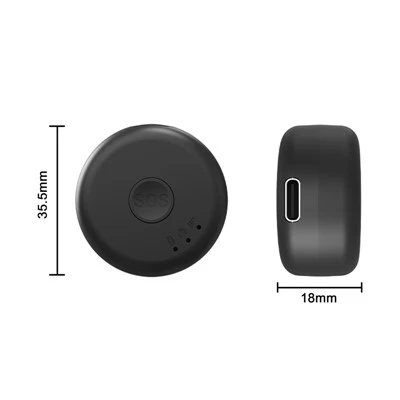
I want to address one more common concern: battery life. A lot of customers assume a long-distance tracker has to be big to have a long battery, but that’s not true. Our smallest long-distance tracker is the size of a credit card, weighs less than an ounce, and has a battery life of up to two years on a single charge, depending on how often you send location updates. If you only need updates every 8 hours, it can last even longer. That’s perfect for things like a boat that’s stored for half the year, or a trailer that’s only used a few times a year—you don’t have to worry about charging it every month.
Now, who are these trackers for? It’s not just big fleets or large-scale operations. A lot of individual users are realizing the value. For example, people who travel with their RV or boat: if you leave your RV parked at a campground for a month, a long-distance tracker can alert you if someone tries to move it, or show you exactly where it is if it gets towed. For parents who have a teen driver, a long-distance tracker in their car can give you peace of mind if they drive to another town for a game, so you know they arrived safely and didn’t take a longer route than they should have. Even pet owners can use them—our trackers are small enough to put on a dog’s collar, so if your dog runs off in a remote area, you can find them quickly instead of searching for hours.
Of course, no technology is perfect. Long-distance trackers do have limits. If you put one in a completely enclosed metal container, the satellite signal can be blocked, so you’ll get less accurate location data until you move it to an outside spot. If you set the update interval to every minute, the battery life will be shorter, because it’s sending data more often. And while most networks cover the entire U.S., some international networks might have gaps in remote areas, so it’s always good to check coverage if you’re tracking something outside the country.
At the end of the day, the question “Are there GPS trackers with long-distance tracking?” has a very clear answer: yes, and they’re more versatile and reliable than ever before. As a GPS tracker supplier who’s been in this industry for 8 years, I’ve seen firsthand how these tools change the way people run their businesses, protect their property, and have peace of mind. It’s not just about tracking a location—it’s about saving time, reducing stress, and making sure you always know where your most important assets are, no matter how far they go.
If you’re tired of trackers that die too fast, cut out in remote areas, or come with hidden fees, we can help you find the right long-distance tracker for your needs. Whether you’re a small business with a few work trucks, a farmer tracking equipment across the country, or an individual who wants peace of mind for their RV, boat, or loved one, we’ll walk you through the options, answer all your questions, and help you set up a system that works for you. Don’t waste money on cheap trackers that don’t deliver—reach out to us to discuss your requirements and find the perfect long-distance GPS tracker today.
GPS Tracker References
Global Navigation Satellite System (GNSS) Overview. U.S. Department of Defense, 2023.
LPWAN Technologies for Long-Range IoT Applications. International Telecommunication Union, 2022.
GPS Tracking Market Trends and User Adoption. Grand View Research, 2024.
Shenzhen Xuneng Chuangxiang Technology Co., Ltd.
Shenzhen Xuneng Chuangxiang Technology Co., Ltd. is one of the most professional GPS tracker manufacturers and suppliers in China, featured by quality products and good service. Please rest assured to buy bulk customized GPS tracker made in China here from our factory. For price consultation, contact us.
Address: Room 515, Fuxiang Building, No.1 Wenming Road, East Zone, Baishixia Community, Fuyong Subdistrict, Bao’an District, Shenzhen City
E-mail: xn.sungang@gmail.com
WebSite: https://www.szxunneng.com/
