If you’ve ever had to source storage tanks for industrial, commercial, or even municipal use, chances are you’ve heard the term “double-walled tank” tossed around more than a few times. I’ve been supplying these tanks for over 12 years now, and one question I get asked more than any other is: “How does a double-walled tank actually work?” It’s such a fair question, too—at first glance, it’s easy to confuse it with a regular single-walled tank, or write it off as just a more expensive version of what’s been around for decades. But after working with facility managers, engineers, and environmental compliance teams across the country, I can tell you the difference isn’t just in the construction—it’s in the peace of mind it delivers. Let me break this down, no stuffy engineering jargon, just the real-world way these tanks work, and why they matter more now than ever. Double-walled Tank
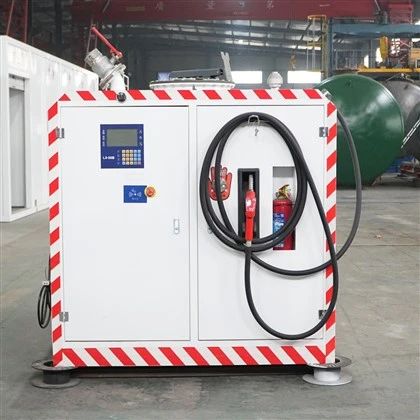
First, let’s start with what a regular single-walled tank is, because that’s the baseline most people know. A single-walled tank is just one hollow container, made from metal (usually steel, sometimes aluminum), fiberglass, or plastic, that holds whatever you’re storing—fuel, water, chemicals, wastewater, even heating oil. The problem is, that one wall is your only line of defense. If it rusts, cracks from pressure, gets punctured by a backhoe during construction, or degrades over time from the contents it’s holding, whatever’s inside leaks straight into the ground, into your building’s floor, or into the surrounding area. I’ve seen this firsthand: a small business owner who installed a single-walled diesel tank for their generator had a pinhole leak from rust that they didn’t notice for six months. By then, 300 gallons of diesel had seeped into the soil under their parking lot, costing them $40,000 in cleanup, fines, and downtime—not to mention the hit to their local environmental record. That’s the risk single-walled tanks carry, and it’s why regulators in most regions have tightened rules around underground and above-ground storage over the last 15 years.
Now, a double-walled tank solves that exact problem by adding a second, separate wall around the inner primary tank. It’s not just a thicker version of a single wall—there’s a deliberate, empty (or filled with a monitoring medium) space between the two walls called an interstice. That interstice is the magic part. Let me explain how that setup functions, step by step, because it’s layered, not just two walls holding things.
The inner wall is the primary containment layer. This is the part that actually holds your product—fuel, chemicals, whatever you’re storing. It’s built to handle the full weight and pressure of the contents, plus wear and tear from whatever you’re putting through it. For many of the tanks I supply, the inner wall is made of a high-grade, corrosion-resistant material like carbon steel lined with a chemical-resistant epoxy, or heavy-duty fiberglass-reinforced plastic (FRP), depending on what the customer is storing. For example, customers holding gasoline or diesel often go with lined steel for its durability, while those storing harsh industrial chemicals prefer FRP, which doesn’t corrode even when exposed to acidic or caustic materials. The inner wall is built to last the same lifespan as a regular single-walled tank—15 to 30 years, depending on use.
The outer wall, though, is the secondary containment layer. Its job isn’t to hold the product directly—it’s to catch any leaks that get through the inner wall. That’s a critical distinction. The space between the inner and outer walls, the interstice, is monitored constantly. That monitoring is what makes a double-walled tank active, not just two walls for show. How does that monitoring work, exactly? There are a few standard setups, and I’ll walk through the most common ones we install.
The first, and most popular for above-ground tanks, is a dry interstitial space with a leak detection probe installed. The probe is a simple sensor that sits in the gap between the walls, connected to an alarm panel mounted wherever the tank is located—whether that’s a basement, a fuel farm, or a chemical processing plant. If even a tiny leak develops in the inner wall, product seeps into the interstice, and the sensor picks it up immediately. The alarm will light up or send a push notification to your phone or facility manager’s email long before the leak gets big enough to escape through the outer wall and cause environmental damage. For our customers, that means they get a text alert at 2 a.m. if a small leak starts, not a call from an environmental inspector two months later.
The second setup is a liquid interstitial space, where the gap between the walls is filled with a non-hazardous, non-corrosive fluid—usually water or a specially formulated oil. This is most common for underground tanks, where the outer wall is exposed to constant pressure from surrounding soil and groundwater. If the inner wall leaks, product mixes with the fluid in the interstice, and that creates a change in the fluid’s level or composition that’s easy to monitor. We add level sensors to these tanks, and any drop or rise in the interstitial fluid triggers an alarm. I’ll be honest, this setup is a little more hands-on to maintain, but for underground tanks, it’s worth it because the outer wall is more likely to get damaged by ground movement or corrosion from the outside, too. Wait a second—those outer walls aren’t just there to catch inner leaks, right? They also protect the inner wall from external damage. If a backhoe nicks the outer wall of a buried tank, or the tank shifts a little and scrapes against a rock, the inner wall stays safe. That’s a double layer of protection in both directions—from inside leaks and outside damage.
Another thing I get asked all the time: are double-walled tanks only for underground use? No, not at all. We supply double-walled tanks for above-ground use too, for everything from residential heating oil tanks to large-scale commercial fuel storage. Above-ground double-walled tanks are often used in areas where underground storage isn’t allowed because of high water tables, or for businesses that want easier access to their tanks for maintenance. For a small restaurant that uses heating oil to run their kitchen, a double-walled above-ground tank sits right outside their building, out of the way, and if a tiny leak develops, the alarm goes off before it can drip onto the pavement or get tracked into the building. It’s a lot simpler than people think, and it fits almost every use case that used to require a single-walled tank.
Now, let’s talk about why these tanks work better than just a separate containment sump or a liner added to a single-walled tank. A lot of people say, “Why not just put a plastic liner inside an old steel tank?” or “Dig a concrete sump around an underground tank?” Those are both common workarounds, but they’re not the same as a true double-walled tank. Liners inside tanks can tear or degrade over time, and you can’t monitor the space between the liner and the original tank. Concrete sumps for underground tanks are hard to inspect—you can’t see inside them to check for leaks, and they often crack from ground pressure, so they lose their containment ability. A true double-walled tank is a single, integrated unit, built at the factory to precise tolerances, with a monitored gap between the walls. There’s no chance of a liner slipping, a sump cracking, or a gap that you can’t check. That’s the key difference: it’s a system designed from the start to be leak-proof, not just a patch added to an existing tank.
I know some customers worry about cost, and I get it—double-walled tanks do cost more upfront than single-walled ones. But when you add up the savings, it’s no contest. Let’s go back to that small business owner I mentioned earlier: he paid $2,000 for a single-walled tank, then $40,000 in cleanup and fines. A double-walled tank would have cost him $5,000 upfront, and a small leak would have triggered an alarm before he even noticed it, so he would have paid a hundred bucks for a technician to come seal the pinhole, no fines, no cleanup, no downtime. For larger industrial customers, the numbers are even starker: a $50,000 double-walled tank prevents millions in potential fines, regulatory penalties, and environmental damage. That’s not a sales pitch—it’s the real ROI I see every day from customers who make the switch.
Maintenance is another big part of how these tanks work, and I want to be clear: they’re not set-it-and-forget-it, but the maintenance is minimal, way less than a single-walled tank. You do need to have the interstitial sensors calibrated once a year, per local regulatory requirements, and you should do a visual check of the outer wall a couple times a year to make sure there’s no rust or damage. That’s it. Compare that to a single-walled tank, which requires monthly checks for leaks, regular corrosion testing, and if it’s underground, periodic emptying and inspection to check for rust from the inside. It’s way less work, and way less chance of missing a problem.
Over the years, I’ve helped customers size and install double-walled tanks for all kinds of needs, and I’ve learned that the best part of these tanks is that they’re adaptable. We can build them to hold anything from 50 gallons of heating oil for a small home to 100,000 gallons of industrial chemicals for a manufacturing plant. We can customize the materials—steel, FRP, aluminum—based on what the product is, and we can add extra features like automatic fill valves, temperature sensors for fuel storage, and even GPS tracking for large tanks. The core design stays the same: two walls, a monitored interstice, and a way to catch and alert for leaks before they cause damage.
What I see most as a supplier is that people don’t realize how much risk they’re taking with a single-walled tank until something goes wrong. Leaks don’t always look like big puddles on the ground. They can be tiny, slow seeps that go unnoticed for months, eating away at soil, groundwater, and even the inside of a building’s structure. Double-walled tanks remove that risk by putting a barrier between your product and the environment, and a sensor that catches problems early.
At the end of the day, a double-walled tank works because it’s proactive, not reactive. It’s built to prevent leaks before they turn into disasters, and to alert you the second a problem starts, so you can fix it fast, with minimal cost and no hassle. If you’re still using a single-walled tank, or if you’re looking to upgrade your storage system, I’d be happy to walk you through the options, size a tank for your needs, and answer any questions you have. We work with customers across all industries, from small businesses to large corporations, and we make the process easy—no confusing jargon, no hidden fees, just a reliable tank that keeps your product safe and compliant with local regulations.
If you’re ready to learn more, or to start the process of getting a double-walled tank for your space, don’t hesitate to reach out and start a conversation. We can talk about your specific needs, answer any questions you have about installation, maintenance, or compliance, and help you find the right solution for your storage requirements.
Explosion-proof Fuel Station References
- American Petroleum Institute. (2019). Standard for Storage Tank Systems for Petroleum Products and Allied Petroleum Products (API 650).
- National Fire Protection Association. (2020). Standard for the Storage and Handling of Flammable and Combustible Liquids (NFPA 30).
- Underground Storage Tank Regulatory Program. (2022). Federal and State Requirements for Double-Walled Storage Tanks. U.S. Environmental Protection Agency.
- Steel Tank Institute. (2021). Double-Walled Storage Tanks: Design, Construction, and Leak Detection.
Shandong Jingcai Industry and Trade Co., Ltd.
As one of the most professional double-walled tank manufacturers and suppliers in China, we also support customized service. With abundant experience, we warmly welcome you to wholesale high quality double-walled tank in stock here from our factory. Contact us for free sample.
Address: Caojiazhuang Village Industrial Park, Lingcheng Town, Qufu City, Jining City, Shandong Province.
E-mail: shandongjingcai888@gmail.com
WebSite: https://www.sdjingcaicn.com/
